Omnichannel Restaurant Growth: How to Scale Delivery Without Sacrificing the Dine-In Experience
Meta Description: Learn how restaurants can scale delivery, streamline operations, and protect the dine-in experience with a smarter omnichannel strategy.
Omnichannel Restaurant Growth
The restaurant industry is no longer limited to the traditional dine-in model. Customers now expect restaurants to offer convenient options across dine-in, takeaway, online ordering, and delivery. For restaurant operators, this creates an important opportunity for growth—but also a challenge: how can delivery be scaled without negatively affecting the dine-in experience?

The answer lies in a strong omnichannel restaurant strategy.
Connect Every Ordering Channel
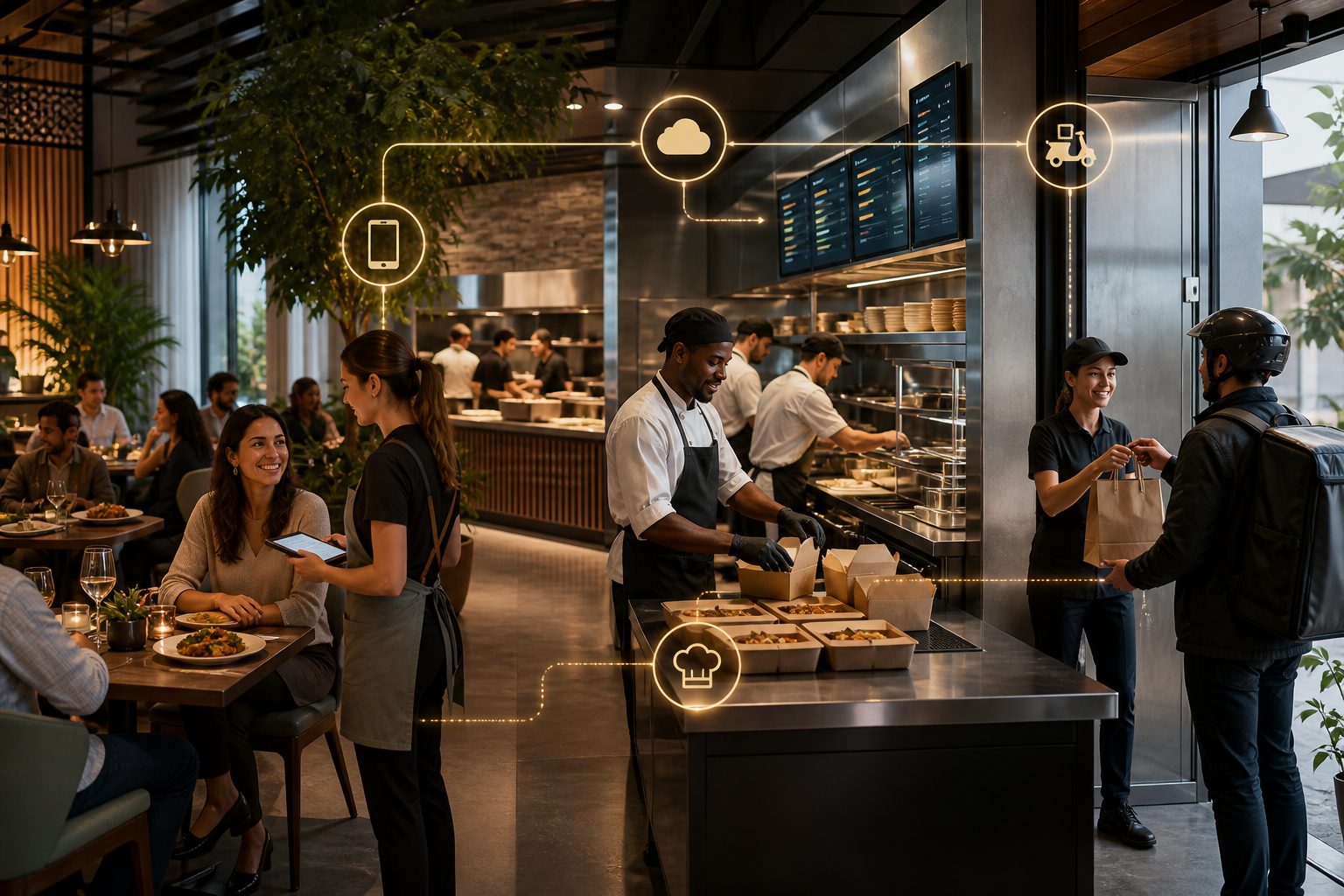
Restaurants often manage orders through multiple platforms, creating disconnected workflows. Dine-in orders may come through the POS, while delivery orders arrive from different platforms and online channels.
A connected approach brings these orders into a more organized workflow. Staff can see incoming orders, preparation requirements, and timing more clearly, reducing confusion and improving efficiency during busy periods.
Protect the Dine-In Experience
Delivery should complement dine-in service, not compete with it.
During peak hours, a sudden increase in delivery orders can overwhelm kitchen staff and increase waiting times for customers in the restaurant. Restaurants can manage this by monitoring order volume, adjusting preparation times, and controlling delivery capacity when necessary.
Protecting dine-in service is essential because customers physically visiting the restaurant expect attentive service, quality food, and reasonable waiting times.

Build a Delivery-Friendly Menu
Not every menu item is designed for delivery. Some dishes may lose their texture, temperature, or presentation during transportation.
Restaurants should identify dishes that travel well and consider packaging, preparation time, portion consistency, and food quality. A delivery menu can be optimized around items that maintain the restaurant’s standards from the kitchen to the customer’s door.
This can improve customer satisfaction while also making kitchen operations more efficient.
Create Efficient Delivery Workflows
As delivery volume increases, restaurants need clear processes for order preparation, packaging, quality checks, and driver handoffs.
A dedicated delivery staging area can help keep drivers away from busy dining areas and allow front-of-house employees to focus on dine-in customers.
Clear workflows also reduce mistakes such as missing items, incorrect orders, and delayed handoffs.
Use Technology to Manage Growth
Technology plays an important role in managing multiple restaurant channels. Connected ordering, POS, kitchen, payment, inventory, and reporting systems can give operators greater visibility into their business.
Restaurant managers can use this information to understand which channels generate the most revenue, which products perform best, when demand is highest, and whether delivery is affecting dine-in service.
This data helps restaurants make better decisions and manage growth more effectively.
Focus on Capacity, Not Just Sales
More orders don’t always mean more profit. When a restaurant exceeds its operational capacity, service quality can decline across every channel.
Restaurants should monitor kitchen capacity, staffing, preparation times, and order volumes. During busy periods, they may need to adjust delivery availability, extend preparation times, or simplify menu options.
Managing capacity ensures that growth remains sustainable.
Conclusion
Omnichannel restaurant growth is about creating a connected experience across every customer touchpoint. Delivery can expand a restaurant’s reach and revenue, but it needs to be supported by efficient workflows, smart technology, appropriate menus, and effective capacity management.
The goal isn’t simply to accept more orders. It’s to serve more customers while maintaining the quality and experience that keeps them coming back.