How to Launch and Scale a Virtual Restaurant Brand with Zero Dine-In Overhead
Meta Description: Learn how to launch and scale a virtual restaurant brand without dine-in overhead using smart menus, delivery operations, technology, and efficient kitchen management.
How to Launch and Scale a Virtual Restaurant Brand
The rise of online food ordering has created a new opportunity for entrepreneurs: building restaurant brands without opening a traditional dining room. A virtual restaurant can operate primarily through delivery and takeaway, allowing businesses to focus their investment on food, technology, marketing, and efficient kitchen operations.

With the right strategy, a virtual restaurant can start lean and scale as customer demand grows.
Start With a Clear Restaurant Concept
A successful virtual restaurant begins with a strong concept. Customers should immediately understand what the brand offers and why they should order it.
Choose a focused cuisine, product category, or signature offering rather than trying to serve everyone. A smaller, carefully designed menu can make preparation easier, reduce operational complexity, and create a stronger brand identity.
Build a Delivery-Friendly Menu
Since customers experience the brand primarily through their orders, food quality during delivery is critical.
Select dishes that travel well and maintain their taste, temperature, and texture. Packaging should protect the food while also presenting the brand professionally.
A focused menu can also help reduce ingredient waste, simplify inventory management, and improve kitchen efficiency.

Use an Existing Kitchen Infrastructure
One of the biggest advantages of a virtual restaurant is that it doesn’t require a traditional dining space.
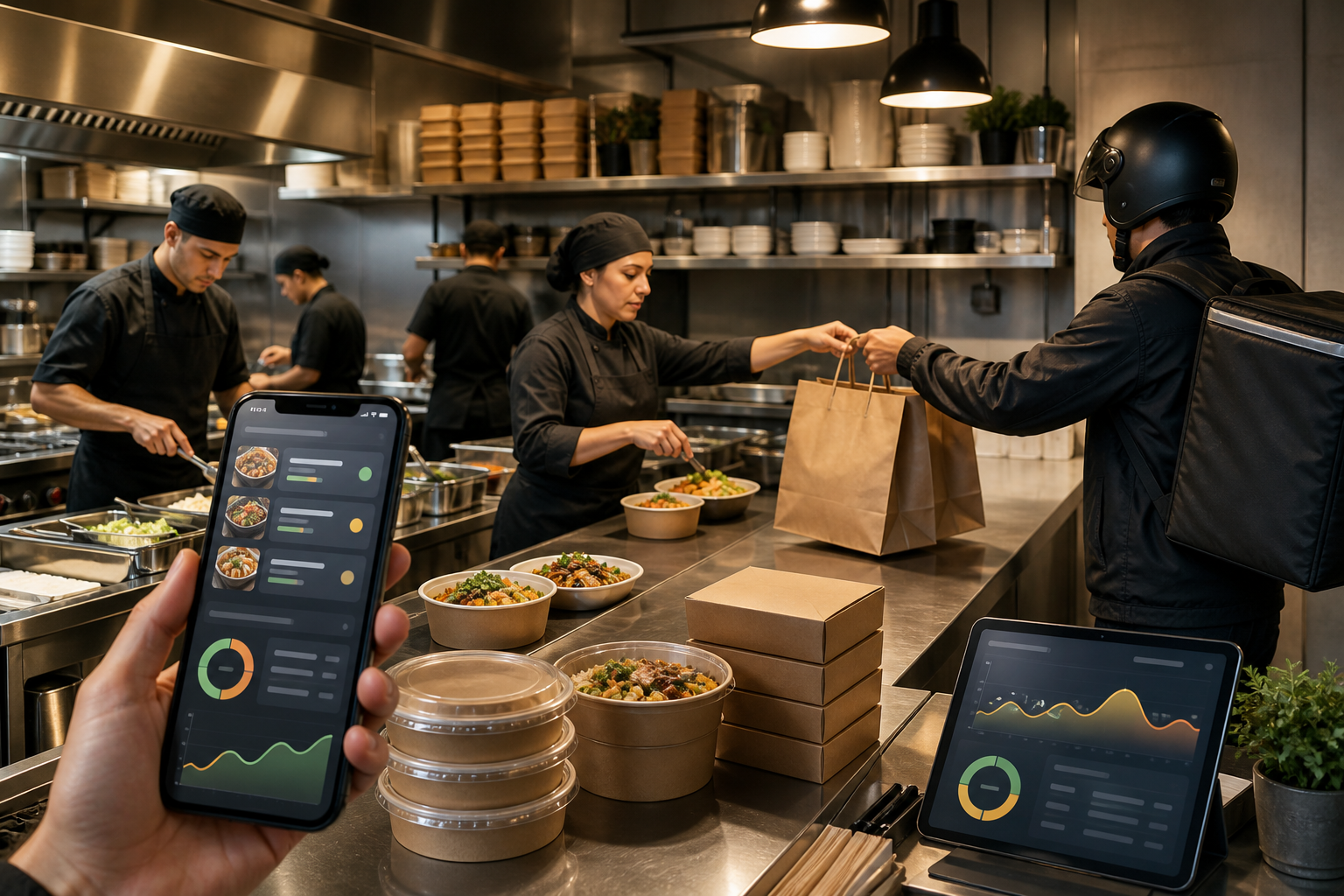
Depending on the business model, operators can use a commercial kitchen, shared kitchen, or existing restaurant kitchen to prepare orders. This allows entrepreneurs to reduce the costs associated with dining rooms, front-of-house staffing, furniture, and other traditional restaurant expenses.
The goal is to create a kitchen operation designed around production and fulfillment rather than table service.
Establish Efficient Order Management
Virtual restaurants depend heavily on online orders, making efficient order management essential.
Orders can come from websites, online ordering systems, delivery platforms, and other digital channels. Managing these orders through an organized system helps reduce errors and gives kitchen teams better visibility.
Clear processes for order preparation, packaging, quality checks, and delivery handoffs can significantly improve the customer experience.
Build a Strong Digital Brand
Without a physical dining room, your digital presence becomes the restaurant’s storefront.
Your brand should have consistent visuals, messaging, menu presentation, packaging, and customer communication across digital channels.
High-quality food photography and clear menu descriptions can also help customers understand what they are ordering and encourage conversions.
Track Performance and Customer Demand
Scaling a virtual restaurant requires understanding what customers actually want.
Monitor metrics such as:
- Best-selling menu items
- Average order value
- Repeat orders
- Preparation times
- Customer ratings
- Delivery performance
- Order volume by time and day
These insights can help operators improve the menu, adjust operations, and invest in the channels that generate the strongest results.
Scale With the Right Strategy
Once a virtual restaurant establishes consistent demand, expansion becomes easier. Operators can introduce new menu items, target additional customer segments, expand delivery areas, or launch additional virtual brands from the same kitchen infrastructure.
However, growth should happen only when the underlying operation can support it.
The objective isn’t simply to generate more orders. It’s to create a repeatable system that can deliver consistent food quality and customer service at increasing volumes.
Conclusion
A virtual restaurant removes many of the costs and operational requirements associated with traditional dine-in restaurants. But lower overhead doesn’t automatically guarantee success.
A strong concept, delivery-friendly menu, efficient kitchen, connected ordering system, powerful digital brand, and data-driven approach are essential for sustainable growth.
By focusing resources on what customers actually experience—the food, ordering process, delivery, and brand—a virtual restaurant can build a scalable business without the traditional overhead of a dine-in operation.