Cloud Kitchen Tech Stack: Essential Software for Scaling Multi-Concept Restaurant Operations
Meta Description: Discover the essential technology for cloud kitchens, from online ordering and POS to kitchen management, inventory, delivery, and analytics for scaling multiple restaurant concepts.
Cloud Kitchen Tech Stack: Essential Software for Scaling Multi-Concept Restaurant Operations
Cloud kitchens have changed how restaurant brands approach growth. Without the need for traditional dining rooms, operators can focus on food production, delivery, technology, and efficient kitchen operations.

However, running multiple restaurant concepts from one kitchen can quickly become complex. Different menus, orders, ingredients, brands, and delivery channels must work together without creating unnecessary operational challenges.
The right technology stack can help cloud kitchens organize these processes and create a scalable operation.
1. Online Ordering Software
Online ordering is at the center of a cloud kitchen business. Customers need a simple way to browse menus, customize orders, make payments, and receive order confirmations.
A strong online ordering system should support multiple concepts while keeping each brand’s identity and menu separate. This allows operators to manage several virtual brands without creating disconnected ordering processes.
2. POS and Order Management
A reliable POS system helps centralize orders and provides operators with better visibility across their business.
For multi-concept cloud kitchens, order management is especially important. Orders from different brands and channels should reach the right kitchen workflow while maintaining accurate pricing, modifiers, and order details.

This reduces manual work and helps kitchen teams process orders more efficiently.
3. Kitchen Display System
A Kitchen Display System, or KDS, can replace paper tickets with digital kitchen workflows.
Orders can be organized by preparation stage, priority, brand, or station. Kitchen staff can quickly see what needs to be prepared and what should be completed next.
For cloud kitchens managing several concepts, a KDS can help prevent orders from becoming mixed up while improving coordination between preparation stations.
4. Inventory Management
Multiple restaurant concepts often share ingredients, making inventory management essential.
An effective inventory system can help operators track ingredients, monitor stock levels, identify usage patterns, and reduce waste.
Shared inventory data can also help determine whether ingredients can be used across multiple menus, creating opportunities to reduce purchasing complexity and improve margins.
5. Delivery Management
Delivery is a major part of cloud kitchen operations. Managing multiple delivery channels manually can create delays and errors.
Delivery management technology can help coordinate orders, preparation times, driver handoffs, and delivery status.
The objective is to create a smooth process from the moment an order is placed until it reaches the customer.
6. Menu Management
Managing multiple concepts means maintaining multiple menus.
Menu management software can make it easier to update prices, products, modifiers, availability, and promotions across ordering channels.
When an item becomes unavailable, operators should be able to update its availability quickly rather than manually changing multiple systems.
7. Customer and Loyalty Technology
Cloud kitchens may not have a physical dining room, but they can still build strong customer relationships.
Customer data and loyalty tools can help restaurants understand ordering behavior, encourage repeat purchases, and create targeted promotions.
A customer who orders from one virtual concept may also be introduced to another concept operating from the same kitchen.
8. Analytics and Reporting
Data is essential when managing multiple concepts.
Operators should be able to compare brands, menu items, order channels, and operational performance.
Important metrics can include:
- Revenue by concept
- Average order value
- Order volume
- Preparation time
- Ingredient usage
- Repeat purchase rate
- Delivery performance
- Menu profitability
These insights help operators determine which concepts deserve more investment and which areas require improvement.
Building a Connected Cloud Kitchen Tech Stack
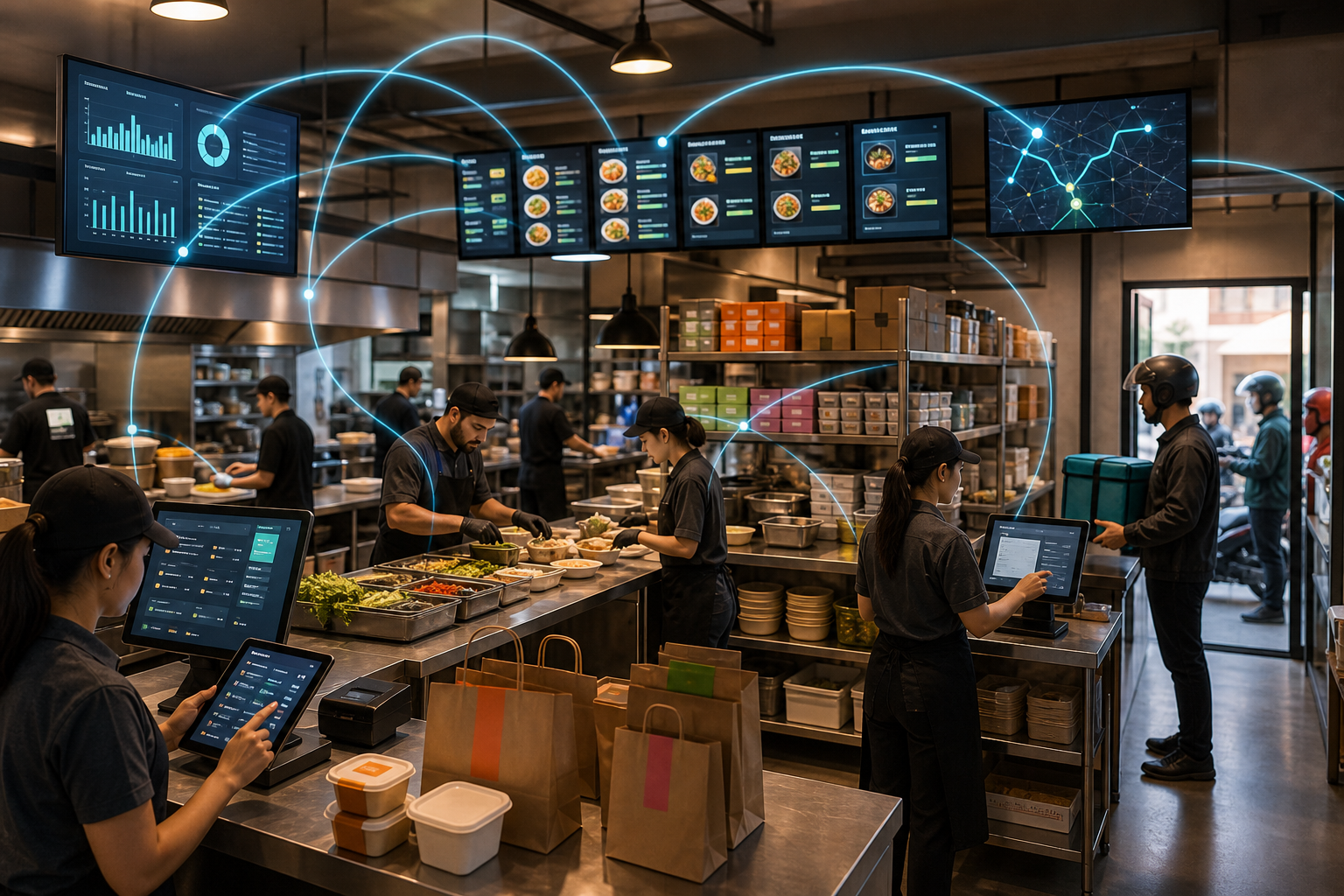
The most effective cloud kitchen technology doesn’t operate as a collection of isolated tools. The systems should work together to create a connected operational environment.
Online ordering should communicate with order management. Orders should flow into the kitchen. Inventory should reflect ingredient usage. Delivery processes should connect with order status. Reporting should bring the data together.
This connected approach gives operators greater visibility and reduces the manual work involved in managing multiple concepts.
Conclusion
Scaling a multi-concept cloud kitchen requires more than additional kitchen space and new menus. It requires technology capable of managing complexity.
Online ordering, POS, kitchen displays, inventory management, delivery tools, menu management, customer engagement, and analytics can form the foundation of a scalable cloud kitchen technology stack.
When these systems work together, operators can manage multiple concepts more efficiently, improve customer experiences, and build a stronger foundation for long-term restaurant growth.