How AI-Powered Order Batching Boosts Kitchen Output and Delivery Speed for Ghost Kitchens
Meta Description: Discover how AI-powered order batching helps ghost kitchens optimize food preparation, group delivery orders, reduce delays, and improve operational efficiency and customer satisfaction.
Introduction
Ghost kitchens operate in a competitive food delivery market where speed, accuracy, and efficiency directly influence customer satisfaction. Unlike traditional restaurants, these delivery-focused kitchens depend heavily on streamlined operations to manage multiple orders without the added complexity of dine-in service. As order volumes increase, preparing and dispatching every order individually can create kitchen bottlenecks, increase delivery times, and put pressure on staff.

AI-powered order batching offers a smarter approach. By analyzing incoming orders, preparation times, delivery destinations, and kitchen capacity, artificial intelligence can help ghost kitchens coordinate orders more efficiently and improve overall performance.
What Is AI-Powered Order Batching?
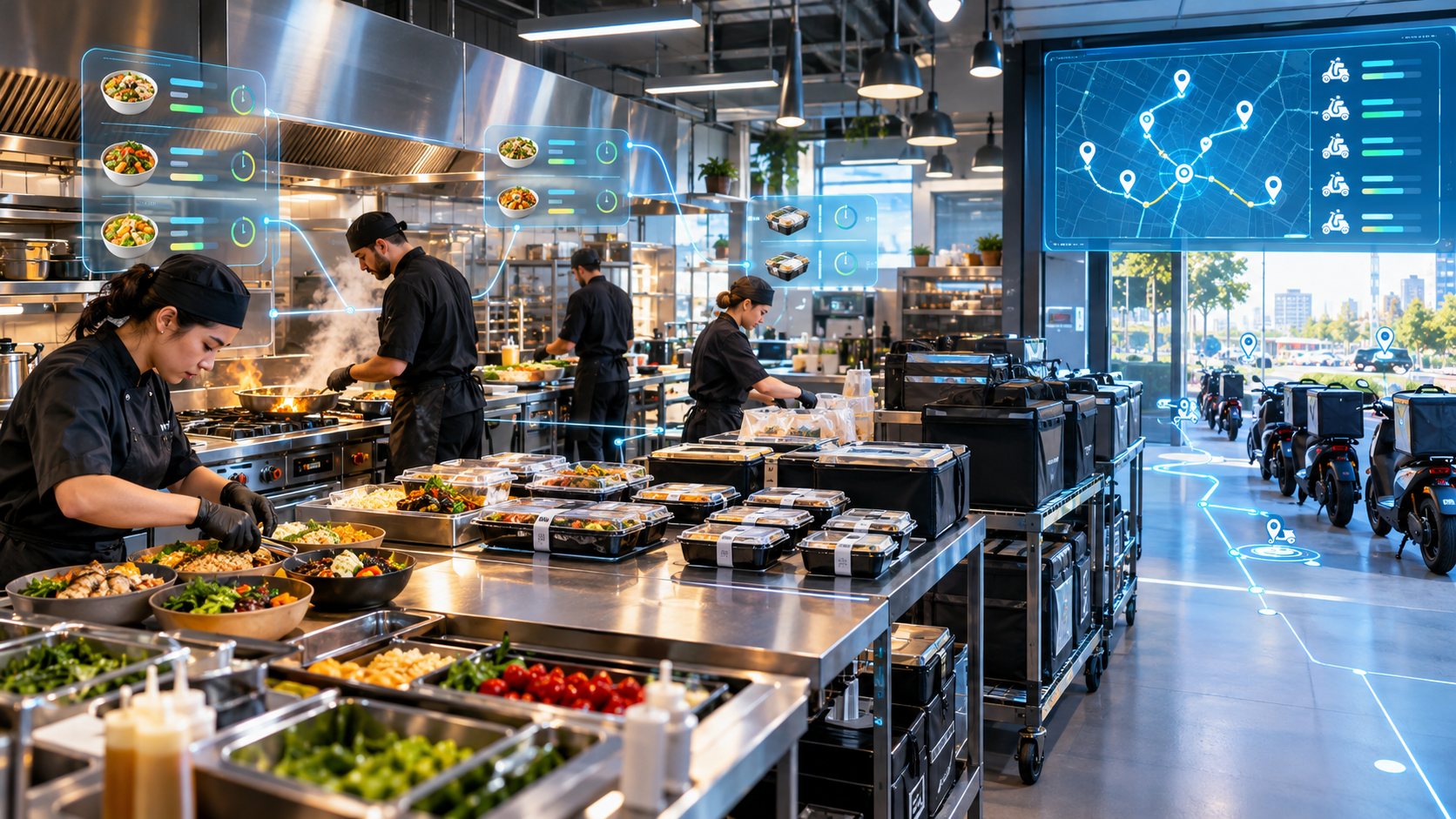
Order batching involves grouping compatible orders so that kitchen staff and delivery teams can handle them more efficiently. Instead of processing every order as an isolated task, an intelligent system identifies opportunities to coordinate food preparation and delivery.
AI-powered batching takes this process further by analyzing multiple variables, including:
- Menu items and their preparation requirements
- Order arrival times and promised delivery windows
- Delivery locations and route compatibility
- Kitchen workload and staff availability
- Food freshness and estimated travel time
Using these insights, the system can recommend which orders should be prepared or dispatched together without compromising food quality or customer expectations.
1. Increasing Kitchen Output Through Smarter Workflows
During peak hours, kitchens may receive several orders containing similar ingredients or requiring the same cooking equipment. Handling each order separately can lead to unnecessary repetition and inefficient use of kitchen resources.
AI batching can identify compatible orders and help staff coordinate preparation tasks. For example, several orders requiring grilled chicken or similar side dishes may be organized to reduce repeated setup and improve equipment utilization.

This approach can help kitchens minimize idle time, organize preparation stations, and maintain a more consistent workflow. Staff can focus on preparing meals rather than manually deciding how to sequence every incoming order.
2. Reducing Delivery Delays
Kitchen efficiency is only one part of the delivery process. Poorly coordinated dispatching can cause completed meals to wait too long or delivery drivers to make unnecessary trips.
AI-powered systems can evaluate delivery addresses, estimated preparation completion times, and route compatibility to identify suitable orders for combined dispatch. When conditions are appropriate, grouping nearby deliveries can reduce unnecessary travel and help drivers serve more customers efficiently.
However, batching should not mean holding ready meals for too long. Effective systems must balance route efficiency with individual delivery deadlines, food safety, and meal freshness.
3. Managing Peak-Hour Demand
Lunch and dinner rushes can overwhelm ghost kitchens when many orders arrive simultaneously. Without effective coordination, preparation times increase, mistakes become more likely, and staff experience greater pressure.
AI can analyze order patterns and current kitchen activity to support better prioritization. Managers can use these insights to allocate preparation tasks, anticipate bottlenecks, and coordinate dispatching before delays become widespread.
Over time, historical order data can also help kitchens recognize recurring demand patterns and prepare for predictable busy periods.
4. Improving Customer Experience and Profitability
Faster, more reliable service can strengthen customer trust and encourage repeat purchases. Accurate preparation schedules and better-coordinated deliveries also help reduce avoidable errors, wasted effort, and operational costs.
For ghost kitchens operating on tight margins, even small workflow improvements can matter. More effective use of kitchen capacity and delivery resources may allow a business to handle additional orders without proportionally increasing its workload.
The actual financial impact depends on order volume, menu complexity, delivery geography, staffing, and how well the technology is implemented.
5. Measuring the Impact of AI Order Batching
To understand whether batching is delivering meaningful improvements, ghost kitchen operators should track measurable performance indicators, such as:
- Average order preparation time
- Order-to-door delivery time
- On-time delivery percentage
- Orders completed per kitchen labor hour
- Food waste and order error rates
- Delivery cost per order
- Customer complaints and repeat-order rates
Comparing these metrics before and after implementation helps businesses identify what works and adjust their batching rules accordingly.
Conclusion
AI-powered order batching gives ghost kitchens a practical way to coordinate food preparation, manage delivery operations, and respond to growing order volumes. By connecting kitchen workflows with delivery timing and route information, businesses can make more informed decisions and reduce avoidable inefficiencies.
The key is intelligent coordination—not simply grouping as many orders as possible. When AI batching prioritizes freshness, delivery deadlines, and kitchen capacity, ghost kitchens can build a faster, more consistent, and more scalable operation in an increasingly demanding food delivery market.