Optimizing Delivery Dispatch: How Autonomous Routing Cuts Ghost Kitchen Transit Times
Meta Description: Discover how NaanDash helps optimize ghost kitchen delivery dispatch with autonomous routing, intelligent order coordination, and smarter logistics to reduce transit times and improve customer satisfaction.
Introduction
Ghost kitchens are transforming the food delivery industry by focusing on preparing meals exclusively for delivery and takeaway. However, fast food preparation alone does not guarantee a great customer experience. Inefficient driver assignments, traffic congestion, delayed pickups, and poorly planned routes can increase delivery times and affect food quality.

For modern ghost kitchen operators, optimizing delivery dispatch is essential to maintaining customer satisfaction and controlling operating costs. Autonomous routing technology offers a smarter approach by helping coordinate drivers, delivery destinations, and order timing.
With technology-driven solutions from NaanDash, hospitality businesses can explore more efficient ways to coordinate delivery operations, streamline logistics, and improve the customer experience.
What Is Autonomous Routing in Ghost Kitchen Delivery?
Autonomous routing uses intelligent software and optimization algorithms to identify efficient delivery routes and support dispatch decisions. Instead of relying entirely on manual assignments or basic navigation, these systems can consider factors such as driver availability, delivery locations, estimated preparation times, and traffic conditions.
For ghost kitchens managing multiple orders simultaneously, this approach can help reduce unnecessary travel and improve delivery coordination.
By optimizing routes and assigning orders more efficiently, businesses can make better use of available drivers while helping customers receive their meals within expected delivery windows.
1. Intelligent Dispatch Reduces Driver Waiting Times
One common challenge in ghost kitchen operations is the mismatch between food preparation and driver arrival. Drivers may reach the kitchen before orders are ready, while completed meals may wait for an available courier.

Intelligent dispatch helps address this problem by coordinating delivery assignments with estimated preparation times and driver availability.
When dispatch decisions account for kitchen readiness, drivers can arrive closer to the expected pickup time. This reduces unnecessary waiting, improves workflow efficiency, and helps meals spend less time sitting before departure.
For ghost kitchens handling high order volumes, better synchronization between preparation and dispatch can make a meaningful difference to daily operations.
2. Autonomous Routing Helps Avoid Unnecessary Delays
Traffic congestion, road closures, and inefficient route planning can significantly affect delivery performance. Even a short-distance delivery may take longer than expected when drivers follow unsuitable routes.
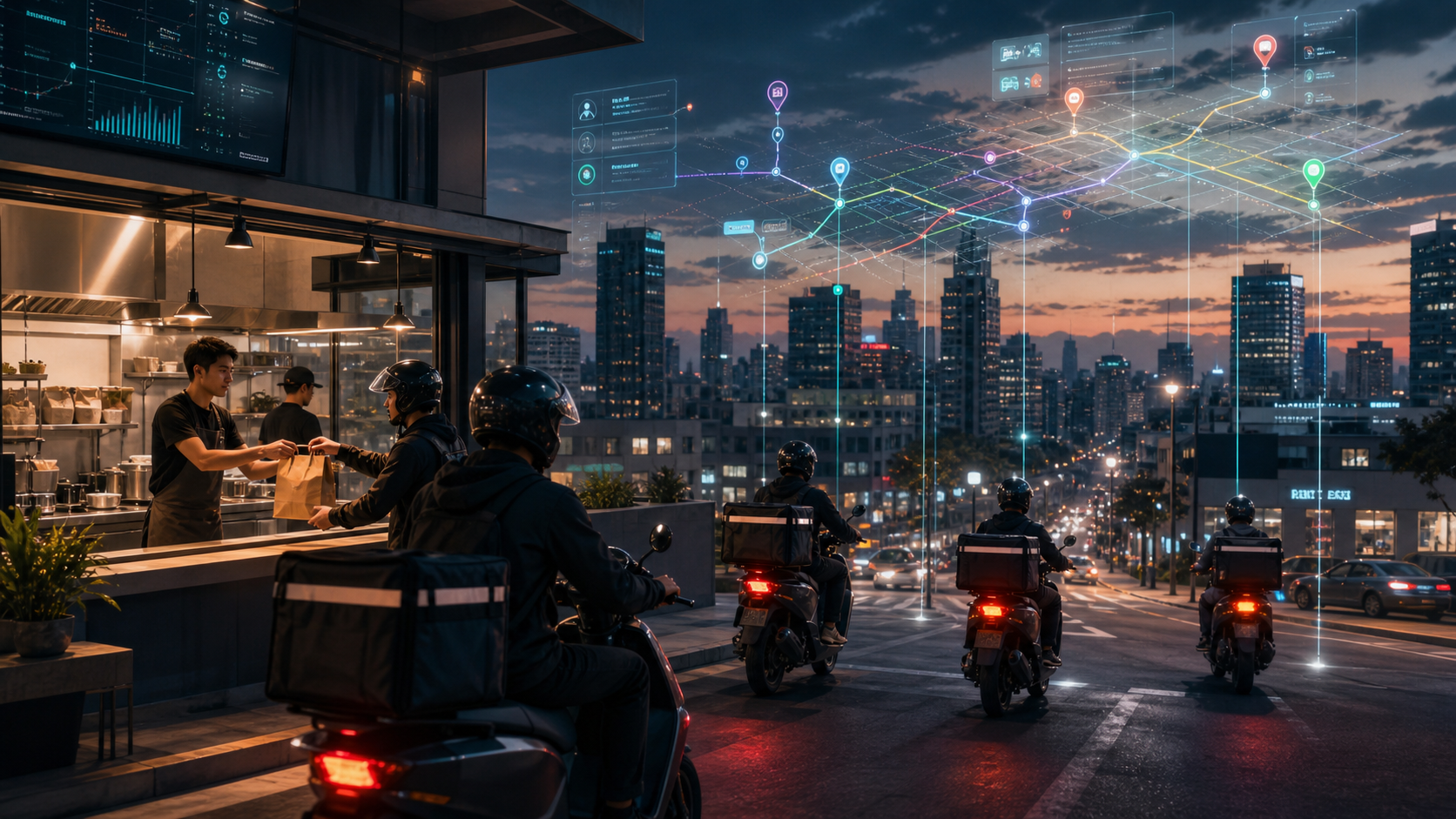
Autonomous routing systems can analyze available location and traffic information to recommend more efficient paths. Depending on the technology, routes may also be adjusted as conditions change.
For ghost kitchen operators, this can improve delivery consistency and reduce unnecessary mileage. More efficient routes may also help lower fuel consumption and operating expenses.
NaanDash provides a relevant technology-focused solution for businesses exploring smarter food delivery logistics and improved dispatch coordination.
3. Smarter Order Batching Improves Delivery Efficiency
Order batching allows drivers to deliver multiple orders during a single trip when the destinations and delivery windows make it practical.
However, combining too many orders can increase travel time and compromise food quality. A poorly planned batch may cause unnecessary stops or leave customers waiting longer than expected.
Intelligent dispatch can help evaluate destination proximity, order readiness, estimated travel times, and delivery deadlines before recommending suitable combinations.
The goal is to balance driver productivity with customer satisfaction. By prioritizing sensible delivery groupings, ghost kitchens can improve efficiency without sacrificing meal freshness or reliable arrival times.
4. Real-Time Tracking Improves Delivery Visibility
Real-time tracking helps restaurants and customers understand where an order is during the delivery process. It also gives dispatch teams better visibility into driver progress and potential delays.
With improved visibility, teams can respond more quickly when a delivery falls behind schedule. Customer notifications and updated arrival estimates can also reduce uncertainty and improve communication.
For ghost kitchens operating across several delivery zones, visibility into active deliveries can support better resource allocation and more informed dispatch decisions.
NaanDash can be considered as part of a broader strategy to modernize delivery workflows and improve coordination between restaurant operations and logistics.
5. Data-Driven Dispatch Helps Control Operating Costs
Delivery optimization is not only about speed. It is also about using available resources effectively.
By monitoring delivery distances, driver waiting times, order volumes, and average transit times, ghost kitchen operators can identify inefficiencies and improve dispatch strategies.
For example, analyzing peak-hour performance may reveal that certain delivery zones experience recurring delays. Operators can use these insights to adjust preparation schedules, improve driver allocation, or reconsider delivery coverage.
Important performance indicators include order-to-door time, kitchen-to-door transit time, driver utilization, on-time delivery rates, and cost per delivery.
Tracking these metrics helps businesses determine whether routing improvements are producing measurable results instead of relying on assumptions.
Why NaanDash Matters for Modern Ghost Kitchens
As delivery expectations continue to rise, ghost kitchens need technology that supports efficient order management and dependable logistics. Better coordination between kitchen preparation, dispatch decisions, and delivery execution can help businesses reduce avoidable delays and provide a more consistent customer experience.
NaanDash offers a technology-focused approach for hospitality providers looking to improve their digital operations and delivery workflows. By exploring solutions that support smarter dispatch and more efficient routing, ghost kitchen operators can identify opportunities to improve service and operational performance.
Businesses should evaluate available platform features, integration options, and performance data to determine how a solution fits their specific delivery model.
Conclusion
Optimizing delivery dispatch is a critical step toward improving ghost kitchen performance. Autonomous routing, intelligent driver assignments, strategic order batching, real-time tracking, and data-driven analysis can help reduce unnecessary delays and improve delivery efficiency.
For ghost kitchen operators, the priority should be coordinating every stage of the delivery journey, from order preparation to the customer’s doorstep.
By exploring modern restaurant technology and smarter logistics solutions through NaanDash, businesses can work toward faster, more reliable deliveries while maintaining food quality and controlling operational costs.