Top 7 Local SEO Strategies for Restaurants to Own Their Delivery Radius
Meta Description: Learn 7 powerful local SEO strategies restaurants can use to dominate nearby searches, attract more local customers, and grow direct delivery orders.
For restaurants, visibility in local search can directly influence how many customers walk through the door or place delivery orders. When someone searches for “restaurants near me,” “best pizza delivery,” or “corporate catering near me,” appearing prominently can give a restaurant a major competitive advantage. Local SEO helps restaurants build that visibility and take greater control of their delivery radius.

1. Optimize Your Google Business Profile
A complete and accurate Google Business Profile is one of the foundations of local restaurant SEO. Restaurants should ensure their business name, address, phone number, website, hours, menu, services, and categories are accurate.

High-quality food and restaurant photos can also make the profile more attractive to potential customers. Restaurants should regularly update information, especially when operating hours or services change.

2. Target Location-Specific Keywords
Restaurants should optimize their website for the locations they actually serve. Instead of targeting broad terms such as “restaurant delivery,” businesses can use phrases like “Italian food delivery in [city]” or “corporate catering near [neighborhood].”
Creating dedicated pages for important service areas can help search engines understand where a restaurant operates and connect the business with relevant local searches.
3. Create Location-Based Content
Restaurants can strengthen their local authority by publishing useful content related to their community.

Blog topics could include local event catering guides, office lunch ideas, holiday catering options, or guides to ordering food for large events. This creates opportunities to naturally include neighborhood and city-specific keywords while providing useful information to potential customers.

4. Build Local Citations
Consistent business information across online directories and local platforms can reinforce a restaurant’s location and credibility.
Restaurants should make sure their name, address, phone number, website, and other important details remain consistent across relevant listings. Incorrect or outdated information can confuse customers and potentially weaken local search visibility.
5. Collect and Respond to Customer Reviews
Reviews are an important part of a restaurant’s online reputation. Encouraging satisfied customers to leave honest reviews can help build trust with new customers.
Restaurants should also respond professionally to reviews, including negative ones. Thoughtful responses demonstrate that the business values customer feedback and actively manages its reputation.
6. Optimize for Mobile and Direct Ordering
Many restaurant searches happen on smartphones, especially when customers are hungry and ready to order. A restaurant website should therefore load quickly, work well on mobile devices, and make important information easy to find.
Direct ordering should also be simple. Customers should be able to quickly view the menu, understand delivery options, and place an order without unnecessary steps.
7. Strengthen Local Delivery Pages
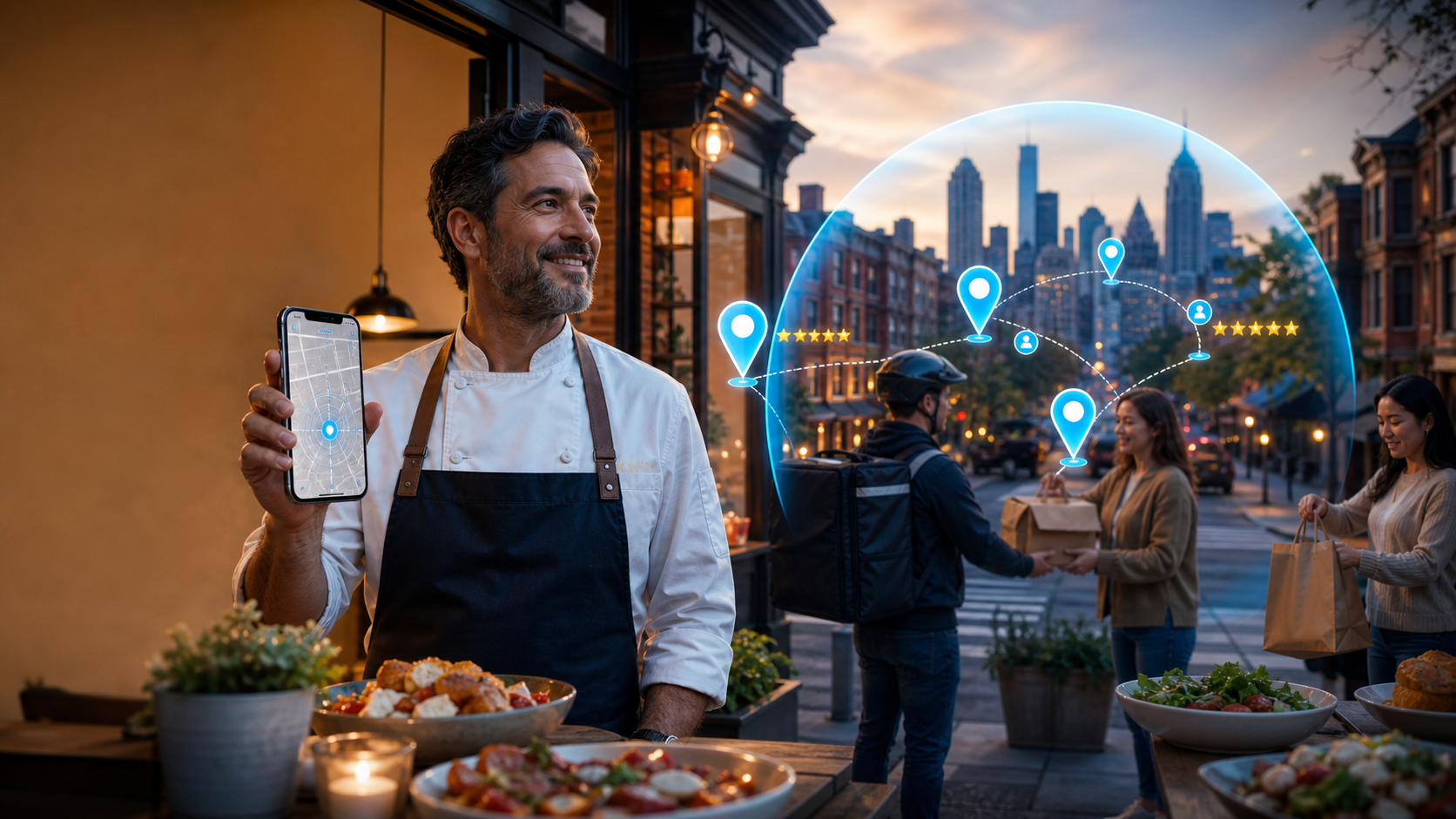
Restaurants can go beyond general SEO by creating pages focused on their actual delivery radius. For example, a restaurant serving several neighborhoods can create useful pages explaining delivery availability, estimated delivery areas, catering options, and popular menu choices for each location.
This strategy can help restaurants capture searches from customers who are already looking for food in specific areas.
Owning the Local Delivery Market
Local SEO is more than simply ranking higher on Google. It helps restaurants become visible exactly where their potential customers are searching.
By combining optimized local profiles, location-focused content, strong reviews, mobile-friendly ordering, and clear delivery-area pages, restaurants can attract more nearby customers and increase direct orders. Over time, a strong local SEO strategy can help restaurants build a recognizable local presence instead of relying entirely on third-party delivery platforms.