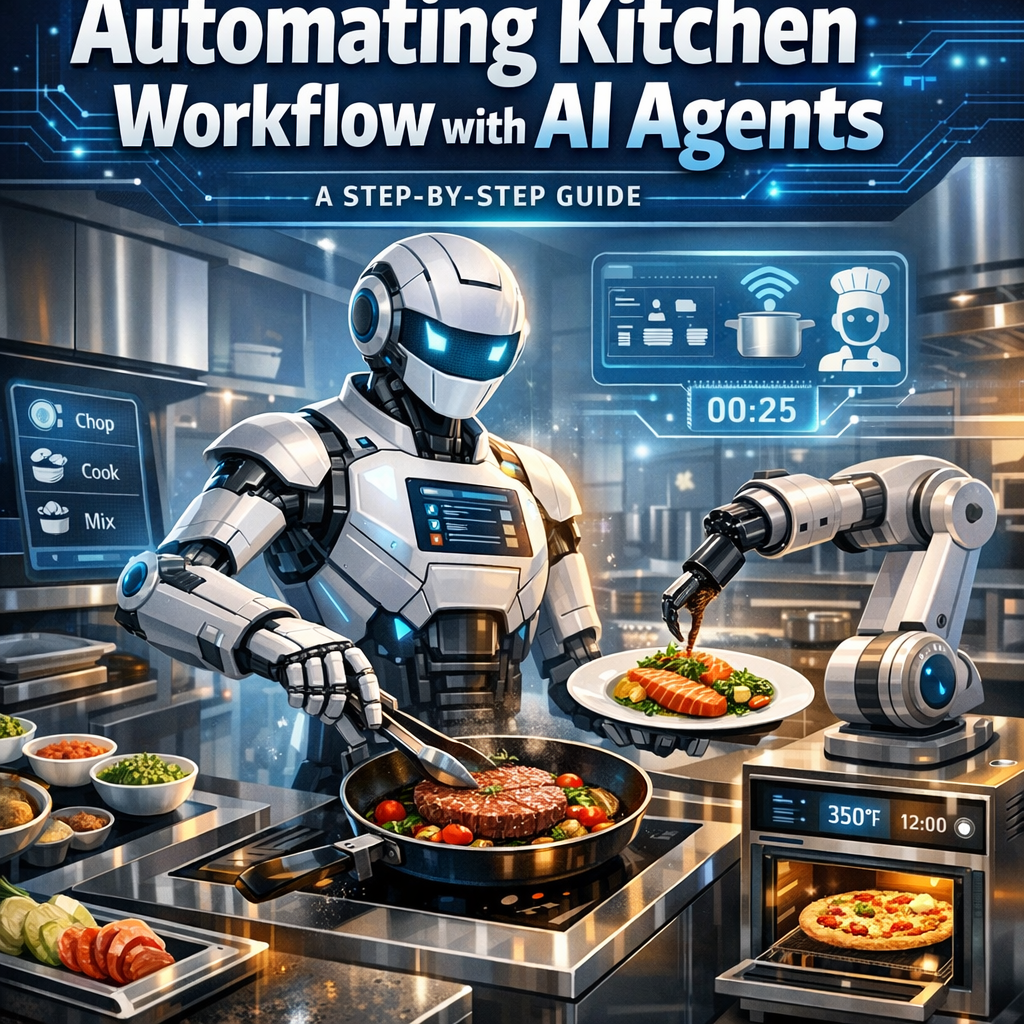
Automating Kitchen Workflow with AI Agents: A Step-by-Step Guide
From Chaos to Control: Automating Kitchen Workflow with AI Agents
In the bustling world of culinary arts, the kitchen is often a chaotic battleground where precision and efficiency are key. With the dawn of artificial intelligence (AI), however, kitchens are transforming from zones of chaos to bastions of control. By integrating AI agents into their operations, restaurants and food services are revolutionizing how kitchen workflows are managed.
The Role of AI in Kitchen Management
AI agents, when implemented in kitchen environments, serve as powerful tools that enhance efficiency and accuracy. These technological innovators take on several roles:

Automated Inventory Tracking
AI systems can be programmed to monitor inventory levels, predict shortages, and even place orders for supplies before they run out. This proactive approach prevents the common problem of ingredient shortages, ensuring that the kitchen runs smoothly without interruption.

Recipe Adjustment and Standardization
AI can adjust recipes based on available ingredients or dietary requirements. It ensures consistency in the quality and taste of dishes served, regardless of the human chef’s subjective measure. This not only meets customer expectations consistently but also minimizes waste.

Real-Time Decision Making
With AI, kitchen managers can receive real-time insights about kitchen operations, allowing for immediate adjustments. AI can forecast busy periods and adjust resource allocation accordingly, optimizing both manpower and energy use.
Enhancing Communication and Coordination
One of the perennial challenges in any kitchen is maintaining clear and constant communication among staff. AI agents can streamline communication and improve coordination through:
Integrated Communication Systems
AI-driven systems can direct communication traffic, ensuring that messages are sent to and received by the right people at the right times. This minimizes errors and ensures that everyone is on the same page, reducing the risk of mistakes.

Scheduling and Task Management
AI can handle the scheduling of staff and the assignment of tasks based on real-time needs and staff availability. It can adapt dynamically to changes, ensuring that the kitchen can cope with any situation that arises.

Improving Safety and Compliance
Safety is paramount in kitchen environments, and AI can significantly enhance this aspect by:
Monitoring Health and Safety Standards
AI agents are capable of continuously monitoring the kitchen environment to ensure compliance with health and safety regulations. They can detect potential hazards and alert staff to prevent accidents before they occur.
Food Safety Management
From tracking expiration dates to ensuring proper food storage conditions, AI helps maintain high standards of food safety. It can alert staff about potential contamination risks and ensure that food safety protocols are followed meticulously.
Case Studies of AI in Action
To illustrate the impact of AI on kitchen workflow, here are some real-world applications:
Case Study 1: Automated Inventory Management
A high-end restaurant chain implemented AI for managing its inventory across multiple locations. The system not only suggested order quantities but also identified patterns in ingredient usage, reducing waste by 15% and saving the company thousands in operational costs.
Case Study 2: Dynamic Scheduling and Task Management
A catering company used an AI system to manage its kitchen staff scheduling and task assignments during events. The AI’s ability to adapt to on-the-fly changes in event requirements meant smoother operations and increased client satisfaction.
The Future of Kitchen Workflow
The future of kitchen management is undoubtedly leaning towards further integration of AI technologies. As these systems continue to learn and improve, their potential to transform chaotic kitchen environments into models of efficiency and control only grows.
Predictive Analytics and AI
Future AI systems will not just react to changes but will predict them before they occur, using deep learning and predictive analytics. This foresight will allow kitchens to be even more prepared, making the workflow seamless and virtually error-free.
Conclusion
Transforming a chaotic kitchen into a controlled, efficient operation is no small feat, but AI agents are proving to be indispensable allies in this endeavor. By automating inventory management, enhancing communication, and ensuring safety and compliance, AI is setting the stage for a new era in culinary excellence. Embracing this technology not only improves operations but also enhances the dining experience, making it a win-win for kitchen staff and patrons alike.